Land Acknowledgement
Before we start the lesson, let's take a moment to think about the land on which we are learning and teaching.
I'm teaching this lesson from Edmonton, Alberta. The city of Edmonton is located on Treaty Six Territory.
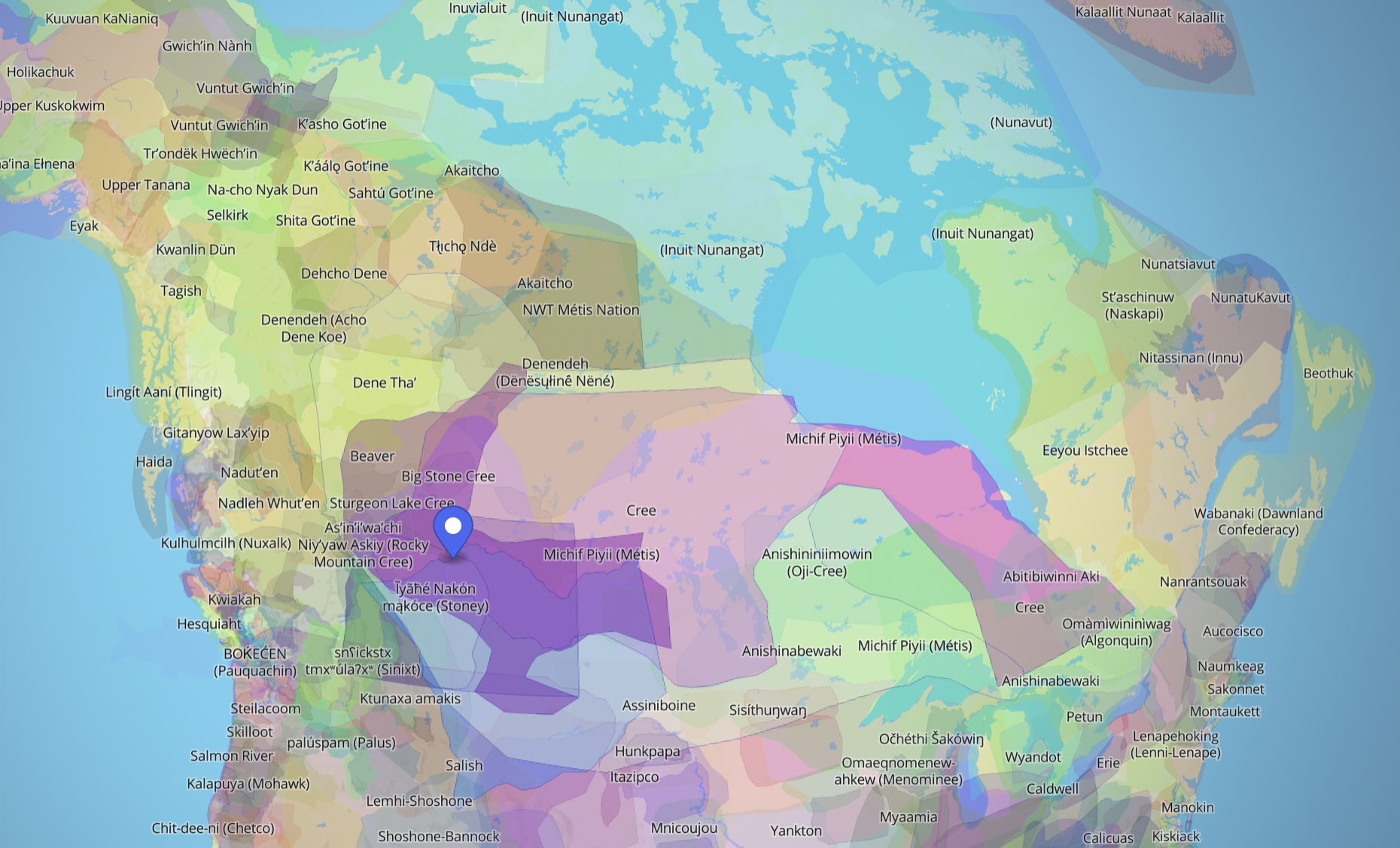
This territory has been a home, a trading post, a travelling route, and more for generations of Indigenous Peoples. In particular, the nêhiyaw (Nay-hee-yow) / Cree, Dene (Deh-neyh), Anishinaabe (Ah-nish-in-ah-bay) / Saulteaux (So-toe), Nakota Isga (Na-koh-tah ee-ska) / Nakota Sioux (Na-koh-tah sue), and Niitsitapi (Nit-si-tahp-ee) / Blackfoot peoples have lived, learned, and work in this place for centuries. This land is also a homeland for the Métis, and the home of one of the largest communities of Inuit south of the 60th parallel.
In this map from native-land.ca you can see a pin representing Edmonton.
Land acknowledgements are just one small piece of the work of reconciliation and must be undertaken in conjunction with other works. Acknowledging the land provides a foundation for recognizing Indigenous sovereignty and self-determination, for respecting Indigenous culture and language, and for committing to reconciliation and allyship.